

FR-Product Catalogue-Q4 2026 |
Warning: The following instructions must be read and understood before installing and maintaining the product.
Warranty: Fernox covers the product for a warranty period of 5 years as long as it is used in the correct manner and under the terms indicated in the technical specifications listed.
Preparation for installation
Ensure that the pipes are clean. Do not allow debris, tape, or any other solid element to settle in the system.
Installation
Fernox Antifreeze Valves must only be installed in a horizontal position, with the outlet facing downwards, to allow the drained water to flow out properly and free from obstructions.
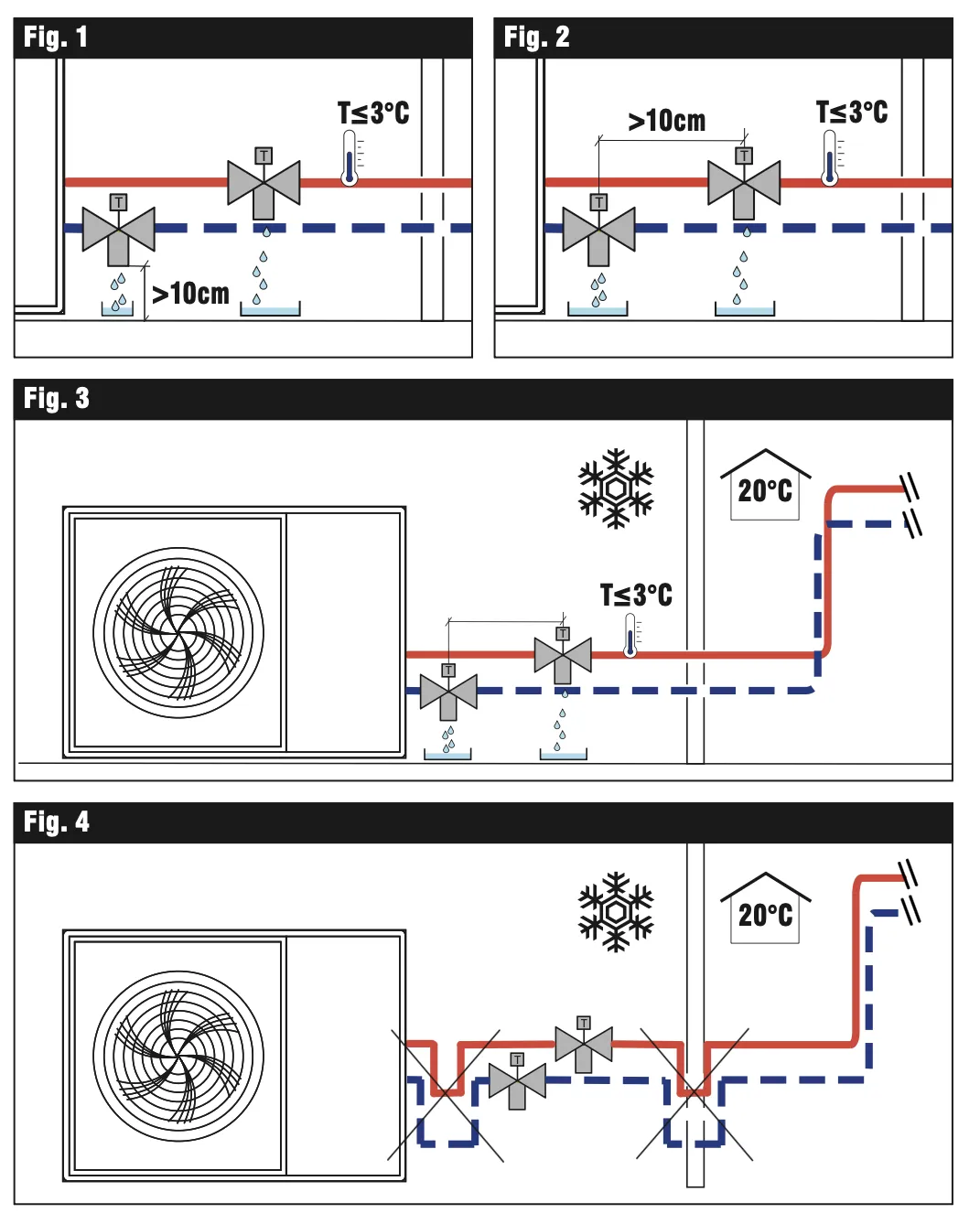
Fernox Antifreeze Valves must be installed externally, in the coldest part of the system, where there is a risk of frost. It is recommended to install a Fernox Antifreeze Valve on both pipes (flow and return Fig. 3). They must also be positioned away from heat sources that could affect correct operation.
Keep a distance of at least 10 cm from the ground (Fig. 1). Maintain a distance of at least 10 cm between the antifreeze valves so that, in the event of a discharge, the valve positioned above does not discharge onto the valve below (Fig. 2).
In-line with regulations, the discharge from the antifreeze valve must be routed into an appropriate collection tray or pipe.
It is advisable to keep the system under pressure at all times, even when draining a Fernox Antifreeze Valve.
In very hard water areas there must be provision for adequate filtration and water treatment of the water before it enters the system, according to technical standards.
Do not make any trap connections.
If the shape of the connection pipe has the potential to create a trap effect (as shown in Fig. 4), drainage is prevented and frost protection will no longer be guaranteed.
Do not use heat above 65°c.
Insulation
Insulation ensures the system is working at optimum efficiency. When using insulation only place it around the body. DO NOT COVER the vacuum breaker. When the valve is installed externally it must be protected from rain, snow and direct sunlight.
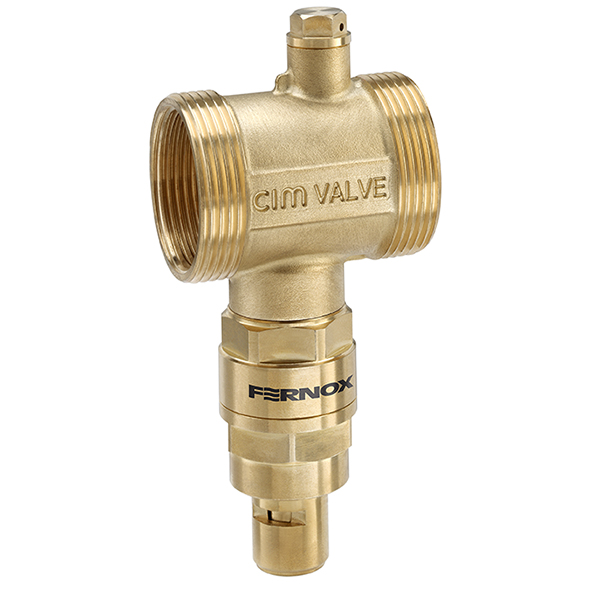
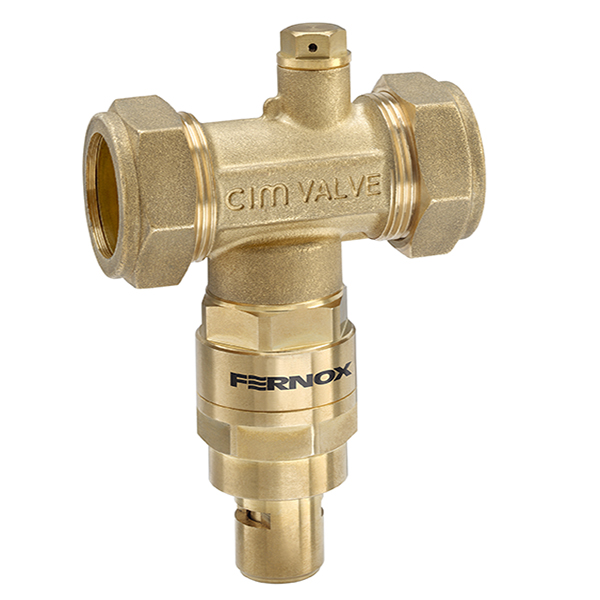
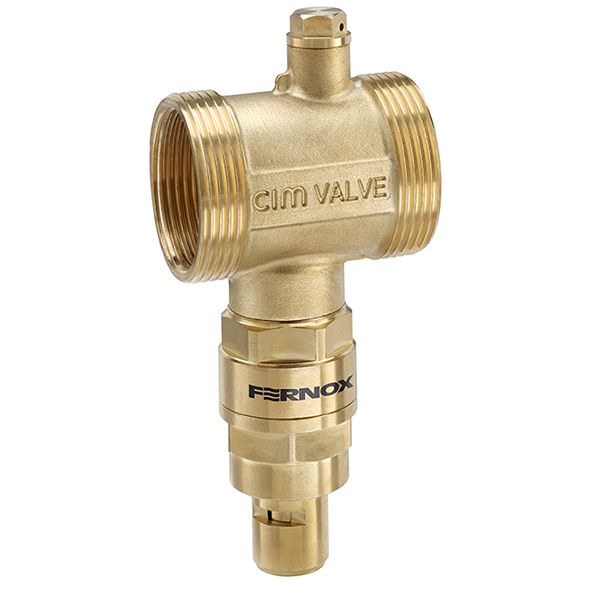
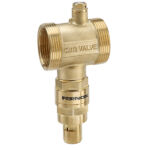
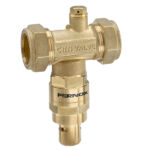
La valve antigel Fernox TF1 permet de vidanger le fluide du système lorsque sa température atteint une valeur moyenne de 3° C. Cela empêche la formation de glace dans le système de chauffage et de refroidissement pour éviter d’endommager la pompe à chaleur et la tuyauterie.
La valve antigel Fernox TF1 doit être installée en position horizontale, avec la sortie vers le bas, pour permettre au fluide du système de s’écouler correctement, sans aucune obstruction et permettant au système d’être vidangé rapidement et efficacement. La valve antigel Fernox TF1 doit être installée à l’extérieur, là où les températures les plus basses peuvent être atteintes, et elle doit être positionnée à l’écart des sources de chaleur qui pourraient avoir un impact sur sa fonctionnalité.
Il est recommandé d’installer la valve antigel Fernox TF1 sur les tuyaux d’écoulement et de retour. Il est recommandé d’isoler la valve antigel Fernox TF1 à l’aide de la couverture thermique de taille appropriée fournie par Fernox.
La fonction principale de la valve antigel Fernox TF1 est de détecter le moment où le fluide dans le système est proche du point de congélation. Lorsque la température dans le système de pompe à chaleur descend en dessous d’un certain point, la valve antigel Fernox TF1 s’ouvre et libère une petite quantité de liquide.
La valve antigel TF1 est un composant essentiel du système de pompe à chaleur, pour protéger le système contre les dommages causés par le gel. Si le fluide dans le système gèle, cela pourrait entraîner des réparations coûteuses et des interruptions de fonctionnement imprévues, privant ainsi le bâtiment de chauffage.
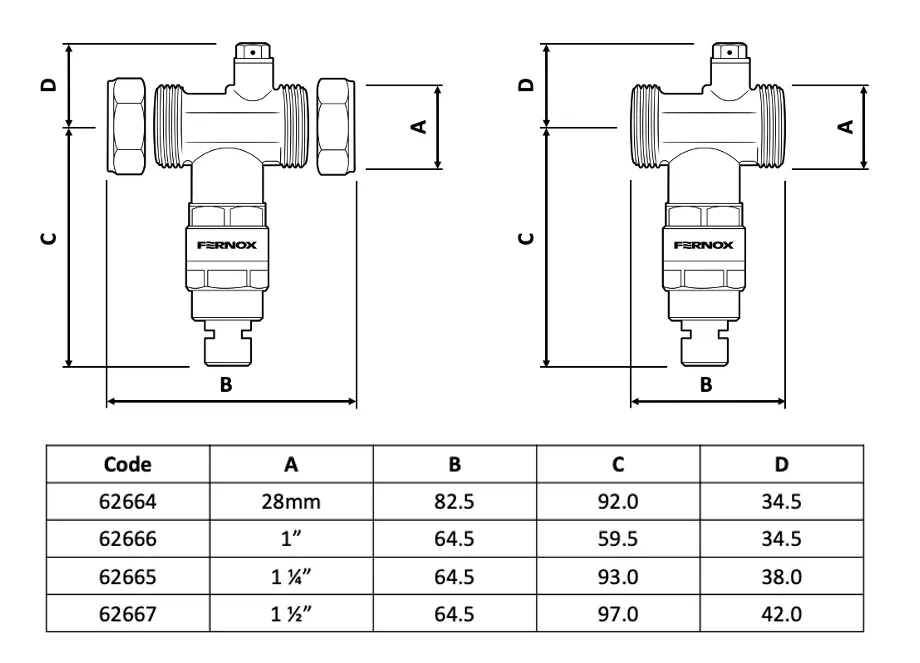
Corps: Alliage de laiton (EN 12165 CW 617 N-DW)
Joints: EPDM
Filetage BSP : ISO 228-1
Produit emballé séparément avec mode d’emploi inclus. Pas de conditions particulières de stockage.
Fluide du système : Eau
Pression statique maximale de fonctionnement : 10 bar
Plage de température de fonctionnement : 0 – 75 °C
Plage de température ambiante : -30 / +60 °C
Température du fluide (ouverture) : +3 °C
Température du fluide (fermeture) : +4 °C
Exactitude: +/-1 °C
Couple de serrage : 60 Nm
Warning: The following instructions must be read and understood before installing and maintaining the product.
Warranty: Fernox covers the product for a warranty period of 5 years as long as it is used in the correct manner and under the terms indicated in the technical specifications listed.
Preparation for installation
Ensure that the pipes are clean. Do not allow debris, tape, or any other solid element to settle in the system.
Installation
Fernox Antifreeze Valves must only be installed in a horizontal position, with the outlet facing downwards, to allow the drained water to flow out properly and free from obstructions.
Fernox Antifreeze Valves must be installed externally, in the coldest part of the system, where there is a risk of frost. It is recommended to install a Fernox Antifreeze Valve on both pipes (flow and return Fig. 3). They must also be positioned away from heat sources that could affect correct operation.
Keep a distance of at least 10 cm from the ground (Fig. 1). Maintain a distance of at least 10 cm between the antifreeze valves so that, in the event of a discharge, the valve positioned above does not discharge onto the valve below (Fig. 2).
In-line with regulations, the discharge from the antifreeze valve must be routed into an appropriate collection tray or pipe.
It is advisable to keep the system under pressure at all times, even when draining a Fernox Antifreeze Valve.
In very hard water areas there must be provision for adequate filtration and water treatment of the water before it enters the system, according to technical standards.
Do not make any trap connections.
If the shape of the connection pipe has the potential to create a trap effect (as shown in Fig. 4), drainage is prevented and frost protection will no longer be guaranteed.
Do not use heat above 65°c.
Insulation
Insulation ensures the system is working at optimum efficiency. When using insulation only place it around the body. DO NOT COVER the vacuum breaker. When the valve is installed externally it must be protected from rain, snow and direct sunlight.